Whats the difference between Mercedes-Benz vs. Mercedes-AMG?
09/26/2023, Keynes Ng
Unraveling the Distinction: Mercedes-Benz vs. Mercedes-AMG
Mercedes-Benz and Mercedes-AMG are two iconic names in the automotive world, both bearing the three-pointed star emblem. While these luxury automobiles share the same pedigree, they cater to different driving experiences and enthusiasts. In this article, we will delve into the nuances that set a Mercedes-Benz apart from its high-performance counterpart, the Mercedes-AMG. So, let’s put the pedal to the metal and explore the key differences that define these automotive giants.
Heritage and Philosophy:
Mercedes-Benz:
Mercedes-Benz is a renowned German automobile manufacturer that traces its roots back to 1926. It is synonymous with luxury, sophistication, and advanced technology. Over the years, Mercedes-Benz has earned a reputation for crafting opulent and elegant vehicles that prioritize comfort and refinement without compromising performance.
Mercedes-AMG:
AMG, on the other hand, stands for Aufrecht, Melcher, and Großaspach — the names of its founders and Aufrecht’s birthplace. Established in the late 1960s as an independent tuner, AMG was later acquired by Mercedes-Benz in the 1990s. The core philosophy behind AMG is to transform Mercedes-Benz models into high-performance, track-oriented beasts with enhanced power, handling, and driving dynamics.
Performance and Power:
Mercedes-Benz:
Mercedes-Benz vehicles are known for their impressive performance, but they emphasize a well-rounded driving experience. With a focus on smooth rides and advanced safety features, their engines balance power and efficiency, catering to a broader range of customers.
Mercedes-AMG:
AMG models, on the other hand, boast adrenaline-inducing performance as their primary calling card. Handcrafted AMG engines, tuned suspension systems, and advanced aerodynamics turn these cars into formidable performers on both road and track. AMG vehicles often house robust, high-displacement engines with turbochargers or superchargers, providing blistering acceleration and breathtaking top speeds.
Design and Aesthetics:
Mercedes-Benz:
Mercedes-Benz designs embrace elegance, class, and timelessness. Their vehicles feature sleek lines, refined details, and a graceful appearance. Inside, a Mercedes-Benz cabin exudes luxury with high-quality materials, ergonomic layouts, and cutting-edge infotainment systems, ensuring a premium driving experience.
Mercedes-AMG:
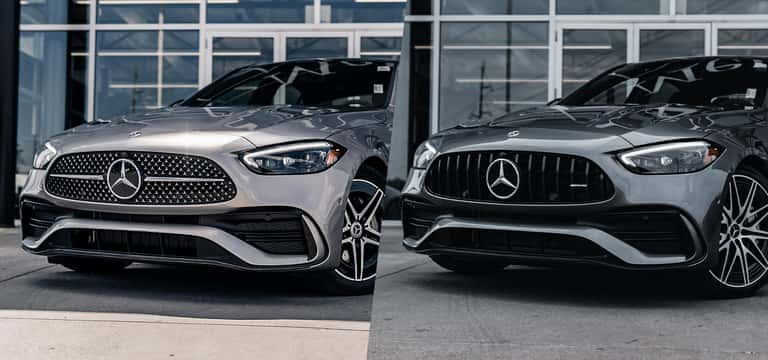
AMG cars adopt a more aggressive and muscular design language to reflect their high-performance capabilities. Larger air intakes, distinctive grilles, flared wheel arches, and quad exhausts are common AMG design cues. Inside, AMG models boast sportier touches, such as performance-oriented seats, steering wheels, and unique upholstery options.
Model Range:
Mercedes-Benz:
The Mercedes-Benz lineup covers a broad spectrum of vehicles, from luxury sedans and SUVs to convertibles and coupes. Their offerings cater to drivers who seek a balance of comfort, style, and performance. Whether it’s the luxurious S-Class sedan, the versatile GLE SUV, or the sporty C-Class coupe, Mercedes-Benz offers a model for every taste.
Mercedes-AMG:
AMG has its own distinct lineup, typically based on existing Mercedes-Benz models. Each AMG model is built to deliver uncompromising performance. From the exhilarating AMG GT sports car to the ferocious AMG G63 SUV, these vehicles are tailored for enthusiasts who crave the thrill of driving.
Conclusion:
In the end, the difference between Mercedes-Benz and Mercedes-AMG lies in their respective philosophies, performance focus, design approach, and targeted customer base. While Mercedes-Benz epitomizes luxury, comfort, and versatility, Mercedes-AMG represents high-octane, track-focused performance that caters to driving enthusiasts. Both brands proudly carry the Mercedes legacy, and regardless of the choice, owning either of these vehicles is a statement of refinement and engineering excellence in the world of automobiles.